10 Best DOT Fittings for Global Buyers in 2026?

Time:2026-09-21 Author:Aria
0%

Choosing the right Dot Fittings in 2026 requires more than comparing prices or polished product photographs. Global buyers need dependable connections for air brake systems, trailers, buses, and commercial vehicles. A fitting may look identical across catalogs, yet its sealing performance can differ under vibration, temperature changes, and repeated assembly.

This guide examines ten leading DOT fittings for international purchasing decisions. Each option is considered through practical criteria, including material quality, pressure performance, corrosion resistance, thread accuracy, and installation consistency. Supplier documentation also matters. Test reports, dimensional drawings, batch traceability, and clear warranty terms can reveal whether a product deserves serious attention.

No ranking is perfect. Real-world results depend on vehicle design, tubing selection, climate, and maintenance practices. A fitting that performs well in a dry workshop may face different conditions on salted winter roads or in humid ports. That is why experienced buyers should verify specifications against their own operating environments. We also consider supplier communication, export packaging, production capacity, and quality-control procedures. These details often influence total cost more than the initial quotation. Small leaks become expensive quickly. Careful verification remains essential.
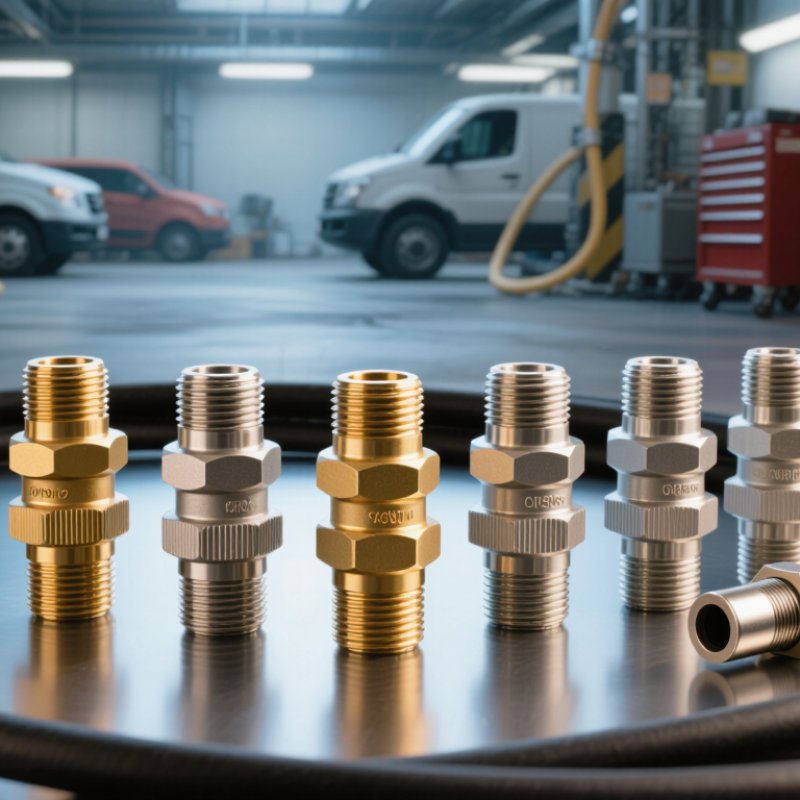
10 Best DOT Fittings for Global Buyers in 2026?

Understanding DOT Fittings and Their Global Applications in 2026

In 2026, DOT fittings support braking, suspension, fuel, and pneumatic systems across many vehicle markets. The term needs care. In the United States, DOT usually refers to regulatory performance requirements, not one universal fitting certificate. FMVSS No. 106 covers brake hoses, while SAE J844 and SAE J1402 address tubing and air-brake hose performance. Global buyers should match the fitting, hose, thread, and sealing method as one complete assembly.

The WHO’s Global Status Report on Road Safety 2023 estimates 1.19 million annual road deaths worldwide. That figure makes dependable fluid connections more than a purchasing detail. The IEA’s Global EV Outlook 2024 reported nearly 14 million electric-car sales in 2023. Electric platforms reduce some engine-related connections, but they still require thermal, hydraulic, and braking circuits. A fitting beside a hot axle faces different stress from one inside a protected cabin. Material choice matters. So does vibration.

For a practical 2026 shortlist, check corrosion resistance, pressure ratings, temperature limits, thread compatibility, and batch traceability. Ask for test records. Confirm the destination market’s standards. Inspect sealing surfaces under bright light. Small scratches can become expensive leaks. A weakness in many buying guides is treating “DOT” as a universal quality mark. It is not. I would not rank a fitting by appearance alone; field performance, installation errors, and maintenance conditions can change the result. That judgment remains imperfect.

Key DOT Standards, Materials, Sizes, and Compatibility Requirements

For global buyers, DOT fittings should be selected by compliance, not appearance. In the United States, brake hose assemblies commonly relate to FMVSS No. 106. Tubing and hose choices may also reference SAE standards, such as SAE J844 and SAE J1402. Always request current test reports, traceability records, and pressure ratings. A fitting can look correct and still leak.

Material affects service life. Plated brass offers good corrosion resistance and easy machining. Stainless steel suits harsh moisture, salt, and chemical exposure, but costs more. Engineered polymer fittings reduce weight, yet temperature limits require careful review. Confirm the tube outside diameter, such as 1/4, 3/8, or 1/2 inch. Thread style matters too. NPTF, metric, and BSP threads are not automatically interchangeable. Do not force them.

Tips: Match the fitting with the approved tube, hose, seal, and working pressure. Check temperature ranges and vibration conditions. Ask for dimensional drawings before ordering samples. Test the complete connection, not only the fitting. In field inspections, thread confusion remains a frequent cause of leaks. I would also recheck regional requirements, because “DOT compliant” may not satisfy every importing market. This point is often underestimated. A small washer, wrong ferrule, or unclear thread specification can delay an entire shipment.

10 Best DOT Fittings for Global Buyers in 2026

Key DOT standards, materials, sizes, and compatibility requirements

How to read this chart: The dimensions show common thermoplastic air-brake tubing outside diameters used with compatible push-to-connect fittings. Values are converted from standard inch sizes to millimeters. Buyers should verify SAE J844 tubing compatibility, SAE J2494 connection requirements, applicable FMVSS No. 106 requirements, thread type, sealing method, temperature range, and working pressure before specifying a fitting.

How to Evaluate the Ten Best DOT Fittings for International Buyers

How to Evaluate the Ten Best DOT Fittings for International Buyers

The ten best DOT fittings should be judged by evidence, not polished catalogs. Begin with compliance. U.S. FMVSS No. 106 specifies requirements for brake hoses, tubing, and fittings, including performance, labeling, and test procedures. Ask suppliers for current test reports, material certificates, and traceable batch numbers. A certificate without test conditions is weak evidence.

Pressure performance matters during installation and service. Compare burst pressure, working pressure, temperature range, vibration resistance, and leakage results. NHTSA’s Large Truck Crash Causation Study identified brake problems among the leading vehicle-related factors in serious truck crashes. This makes sealing reliability more important than a low purchase price. Check thread accuracy with calibrated gauges. Inspect the tube cut, insertion depth, and fitting body for burrs.

International buyers should also examine compatibility. Thread forms, tube materials, metric dimensions, and regional certification practices can differ. UNECE Regulation No. 13 provides widely used requirements for heavy-vehicle braking systems, but it does not automatically validate every fitting. Request independent laboratory results where possible. Confirm packaging against humidity, salt exposure, and long-distance vibration. A small mistake here can become a field failure.

Do not rank suppliers by claims alone. Build a scorecard covering compliance, test depth, tolerances, supply continuity, documentation, and technical support. I would reserve the highest score for repeatable evidence, not attractive samples. That approach is slower. It is also safer.

Sources: U.S. NHTSA, Federal Motor Vehicle Safety Standard No. 106; NHTSA, Large Truck Crash Causation Study; UNECE Regulation No. 13.

Ten Recommended DOT Fittings for Different Vehicle and Operating Needs

Choosing DOT fittings depends on the vehicle layout, air pressure, tube material, and working environment. A straight union suits simple repairs between two aligned tubes. A male pipe adapter connects air tubing to valves or manifolds. A female adapter helps when the valve uses an external threaded port. Use a 90-degree elbow in tight engine bays, while a 45-degree elbow gives a smoother route with less bending stress. A standard tee divides one air line for trailers, suspension systems, or auxiliary circuits.

For larger vehicle systems, a bulkhead union passes tubing through a panel while keeping the connection stable. A reducing union joins tubes with different outside diameters, but sizing must be checked carefully. A swivel elbow helps moving components avoid twisting the tube during service. A union with a test port supports pressure checks during maintenance. A protective plug closes an unused port and limits dirt entry.

Select fittings made for approved air-brake applications, matching thread type, tube size, pressure rating, and temperature range. Inspect sealing surfaces before installation. Do not force a mismatched thread.

Field conditions can be less tidy than catalogs suggest. Vibration, road salt, heat, and rushed repairs may expose weak choices. I would leave extra tube length for service, though excessive slack can rub against nearby parts. Always verify the vehicle manufacturer’s requirements and perform a leak test after assembly. Small details matter.

Global Purchasing Factors: Certification, Suppliers, Pricing, and Logistics

Global buyers should treat DOT fittings as safety-critical components, not ordinary hardware. Certification must match the intended vehicle system, pressure range, material, and installation method. Ask suppliers for current test reports, material certificates, dimensional records, and batch traceability. A familiar certificate is not enough. Requirements can differ across markets and applications.

Supplier evaluation should include factory audits, quality-control procedures, production capacity, and response speed. Request samples before approving large orders. Check thread accuracy, surface finish, sealing performance, and resistance to corrosion. In sourcing projects, small thread deviations have caused leaks and costly rework. A low price can hide inspection gaps, weak packaging, or unstable raw-material quality.

Tips: Compare total landed cost, not only unit price. Include tooling, testing, duties, insurance, freight, and possible replacement costs. Confirm Incoterms, lead time, minimum order quantity, and export documents early. Use moisture-resistant packaging and clear labels for mixed fittings. My checklist is never perfect, so I review it after every shipment. One overlooked logistics detail can delay a complete vehicle assembly. Suppliers should provide realistic production schedules, container plans, and shipment tracking. Reserve extra time for customs clearance, especially when documentation differs between countries.

10 Best DOT Fittings for Global Buyers in 2026? — Global Purchasing Factors: Certification, Suppliers, Pricing, and Logistics
Product comparison for compressed-air brake systems. Ratings, prices, lead times, and pressure ranges are indicative purchasing benchmarks; the exact fitting, tube, hose, thread, and vehicle application must be verified against the applicable technical standard and supplier test documentation.
Rank Fitting Type Typical Application Common Materials Typical Tube / Thread Compatibility Typical Working Pressure Temperature Range Compliance and Test Documents to Request Indicative 2026 Price* Typical MOQ Estimated Production Lead Time Logistics and Buying Considerations
1 Push-to-Connect Straight Union Fast joining of nylon air-brake tubing in maintenance and vehicle production. Nickel-plated brass body; stainless-steel gripping ring; elastomer seal. Commonly 6, 8, 10, or 12 mm metric tube and 1/4, 3/8, or 1/2 inch tube; thread options vary. Typically 150–300 psi, subject to tube and seal selection. Typically -40°C to +100°C; confirm the seal compound. FMVSS 106 hose-system applicability review; SAE J2494 or relevant manufacturer test report; material and burst-test documentation. US$0.45–2.50 per piece 500–2,000 pieces 15–30 days Best for low assembly time. Protect open ports from dust and use packaging that prevents scratches on sealing surfaces.
2 Push-to-Connect 90° Elbow Routing air tubing around chassis members and reducing bend stress. Nickel-plated brass or corrosion-resistant plated alloy; polymer release collar; elastomer seal. Metric or inch tube sizes with male or female tapered pipe threads, depending on configuration. Typically 150–300 psi. Typically -40°C to +100°C. Dimensional inspection; leak and pull-out tests; applicable FMVSS 106 system documentation; thread conformity report. US$0.80–4.00 per piece 300–1,500 pieces 15–35 days Useful where installation space is limited. Check elbow orientation, tightening clearance, and resistance to road splash and salt.
3 Swivel Elbow Dynamic routing and serviceable connections where the tube direction must be adjusted after installation. Plated brass or stainless steel; low-friction swivel section; elastomer seals. Commonly available for nylon tubing with metric or NPT-style thread combinations. Typically 150–250 psi. Typically -40°C to +100°C. Swivel-cycle test; leak test at operating and proof pressure; thread and material certificates; applicable hose-system evidence. US$1.50–6.00 per piece 200–1,000 pieces 20–40 days Higher unit cost but can reduce tube kinking and assembly errors. Confirm whether the swivel is designed for continuous movement or installation adjustment only.
4 Push-to-Connect Tee Branching a service, supply, or auxiliary air circuit. Nickel-plated brass; stainless-steel or hardened retaining components; elastomer seals. Equal or reducing tube ports in common metric and inch sizes. Typically 150–300 psi. Typically -40°C to +100°C. Flow-direction and leakage test; pull-out test; dimensional report; applicable vehicle air-brake system documentation. US$1.00–4.50 per piece 300–1,500 pieces 15–35 days Confirm branch geometry and port identification. Avoid mixing metric tube ports with inch tube ports without clear labeling.
5 Bulkhead Union Passing air tubing through a panel, frame rail, bracket, or compartment wall. Plated brass body; locknut; sealing washer or O-ring; corrosion-resistant hardware. Tube-to-tube configurations with panel thickness and hole-size requirements. Typically 150–250 psi. Typically -40°C to +100°C. Panel-retention test; vibration and leak testing; salt-spray data for plated parts; dimensional drawing and installation torque. US$1.20–5.50 per piece 200–1,000 pieces 20–40 days Check panel thickness, hole diameter, locknut access, and clearance for abrasion protection around the tubing.
6 Brass Compression Fitting Durable connections for service lines, fixed installations, and applications requiring traditional mechanical retention. Forged or machined brass; brass ferrule; optional plated finish. Usually matched to a specified tube outside diameter and thread standard; not interchangeable across sizes. Typically 150–300 psi when correctly matched and assembled. Typically -40°C to +120°C, depending on seal and tube material. Pressure and leak test; dimensional inspection; thread gauge report; material composition certificate; installation instructions. US$0.35–3.00 per piece 500–3,000 pieces 15–30 days Lower tooling risk and broad availability. Correct tube preparation and tightening torque are critical to prevent leakage.
7 Male or Female Adapter Connecting air-brake tubing or components with different port forms, thread genders, or thread sizes. Brass, plated brass, stainless steel, or approved engineering alloy. Common combinations include tube-to-NPT, tube-to-metric pipe thread, or male-to-female pipe thread. Typically 150–300 psi. Typically -40°C to +120°C. Thread standard and gauge report; torque and leak test; plating or corrosion-resistance report; material certificate. US$0.40–3.50 per piece 300–2,000 pieces 15–35 days Thread mismatch is a major purchasing risk. Specify thread form, pitch, sealing method, port depth, and applicable regional standard in the drawing.
8 Hose-End Fitting Terminating flexible air-brake hose assemblies at valves, reservoirs, couplers, or chassis components. Plated steel, stainless steel, or brass; crimp sleeve or reusable mechanical retention design. Selected according to hose inner diameter, outer diameter, thread, and assembly method. Typically 150–300 psi; the complete hose assembly rating governs. Typically -40°C to +100°C; verify hose and fitting combination. FMVSS 106 hose-assembly evidence where applicable; SAE or regional hose-assembly test results; crimp-dimension and burst-pressure records. US$1.00–7.00 per piece 200–1,000 pieces 20–45 days Do not qualify the fitting separately from the hose. Require assembly instructions, crimp settings, proof-test records, and traceability.
9 Check-Valve Fitting Preventing reverse airflow in auxiliary circuits, protection branches, and selected control-system layouts. Brass or stainless steel body; spring and poppet; elastomer seat. Threaded or tube-end configurations in common air-line sizes. Typically 150–250 psi; cracking pressure commonly specified separately. Typically -40°C to +100°C. Flow-direction, cracking-pressure, backflow, leakage, and endurance test reports; material and seal compatibility documentation. US$2.00–10.00 per piece 100–500 pieces 25–50 days Specify normal flow direction and acceptable pressure drop. Protect from contamination because small internal valves are sensitive to particles.
10 Drain or Service Fitting Air-reservoir draining, maintenance access, pressure testing, and controlled service connections. Brass, plated steel, or stainless steel; optional pull-ring, screw, or valve mechanism. Commonly pipe-threaded ports; size and thread depend on the reservoir or component design. Typically 150–300 psi. Typically -40°C to +120°C. Leak and operating-cycle test; pressure and temperature rating; corrosion-resistance report; thread and torque documentation. US$1.00–8.00 per piece 100–1,000 pieces 20–45 days Confirm accessibility, drainage direction, sealant compatibility, and resistance to water, oil mist, de-icing chemicals, and road debris.
*Indicative prices are typical bulk-export ranges in U.S. dollars per piece for standard configurations, excluding tooling, certification fees, packaging, freight, duties, and taxes. Final pricing depends on material, finish, thread standard, order quantity, inspection level, and Incoterms. For global procurement, request a dimensional drawing, complete material declaration, lot traceability, pressure/leak test records, applicable FMVSS 106 or regional compliance evidence, and a pre-shipment inspection before approval.

FAQS

What does “DOT fitting” mean in 2026?

In the United States, “DOT” usually refers to performance requirements. It is not one universal fitting certificate. Match the fitting, hose, thread, and sealing method together. The wording can still confuse buyers.

Which vehicle systems use these fittings?

They support braking, suspension, fuel, and pneumatic systems. Electric vehicles still need thermal, hydraulic, and braking circuits. The engine may disappear. Fluid connections do not.

How do I choose the correct fitting shape?

Use a straight union for aligned tubes. Choose a 90-degree elbow inside a tight engine bay. A 45-degree elbow usually reduces bending stress. A tee divides one air line. A bulkhead union passes tubing through a panel.

When are special fitting designs useful?

A reducing union joins different tube diameters. Check both sizes carefully. A swivel elbow helps moving parts avoid twisting the tube. A test-port union allows pressure checks. Use a protective plug on unused ports.

What specifications must match?

Confirm tube size, thread type, pressure rating, and temperature range. Check corrosion resistance too. Salt, heat, and vibration can defeat a fitting that looks strong. Appearance alone proves very little.

How should I inspect a fitting before installation?

Examine the sealing surfaces under bright light. Look for scratches, dirt, or damaged threads. Request test records and batch traceability. A tiny scratch can become a costly leak. I would not skip this step.

What installation mistakes should I avoid?

Never force a mismatched thread. Leave enough tube length for future service. Avoid excessive slack, because loose tubing may rub nearby parts. Catalog diagrams look tidy. Real repairs are often messier.

How can I verify the finished connection?

Confirm the destination market’s requirements before assembly. Check every connection after installation. Perform a leak test under suitable conditions. Reinspect after service or vibration exposure. My judgment is not absolute; field conditions can change the outcome.

Conclusion

This guide explores the role of Dot Fittings in vehicle air-brake, hydraulic, and related fluid-control systems used across international markets in 2026. It explains how buyers can compare fittings by DOT compliance, pressure ratings, temperature resistance, corrosion protection, materials, thread types, tube sizes, sealing methods, and compatibility with different vehicles and operating environments. The article also outlines practical considerations for selecting fittings that support reliable installation, maintenance, and long-term performance.

It presents ten recommended fitting categories for passenger vehicles, commercial trucks, trailers, buses, specialty equipment, and demanding work conditions. For global buyers, the guide emphasizes the importance of verifiable certifications, consistent manufacturing quality, responsive suppliers, transparent pricing, minimum order quantities, packaging, documentation, lead times, customs preparation, and shipping efficiency. Together, these factors provide a clear framework for making safe, cost-effective, and internationally suitable purchasing decisions.


Aria

Aria

Aria is a dedicated marketing professional with a deep passion for innovative strategies and a keen understanding of our company's product offerings. With a wealth of experience in the industry, Aria excels at crafting engaging content that highlights the unique features and benefits of our......