How to Choose Liquid Cooling Fittings for Global Buyers?

Time:2026-10-16 Author:Mason
0%

Choosing Liquid Cooling Fittings for global systems is not a simple catalog exercise. The right connection must match the tubing, coolant, pressure, temperature, and maintenance plan. A fitting that seals perfectly in a workshop may fail after months of thermal cycling. Small details matter. Thread standards matter. So does material compatibility.

Roger W. Schmidt, an IBM Fellow and respected data-center cooling specialist, has stated, “There is no one-size-fits-all solution to data-center cooling.” That warning applies directly to Liquid Cooling Fittings. Global buyers must compare BSP, NPT, and metric threads carefully. They should also check whether EPDM, FKM, silicone, or another seal material suits the coolant. A copper loop, for example, may require different corrosion controls than an aluminum assembly. The fitting’s inner diameter can also affect flow resistance and pump performance.

This guide focuses on practical selection, not attractive product photos. It examines push-in, compression, barbed, quick-disconnect, and panel-mount designs. It considers installation space, leak testing, replacement access, and supply consistency across regions. Certifications and traceable material data deserve attention, too. They reduce uncertainty.

Even experienced buyers get this wrong. Sometimes, the cheapest fitting becomes the most expensive component. A neat installation can still be poorly specified. Product data may also be incomplete. That is why every recommendation should be checked against the complete cooling loop, not one isolated part. The goal is a dependable connection that performs quietly, repeatedly, and predictably. No choice is perfect, but a documented choice is easier to defend and improve.
How to Choose Liquid Cooling Fittings for Global Buyers?

Understanding Liquid Cooling Fitting Types and Their Applications

How to Choose Liquid Cooling Fittings for Global Buyers?

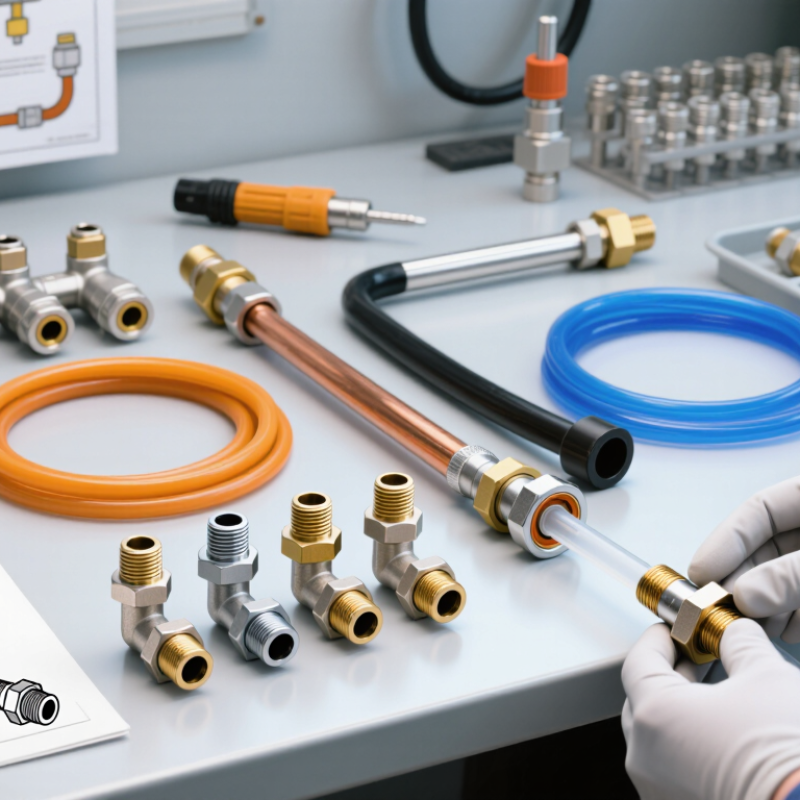
Liquid cooling fittings connect tubing, blocks, manifolds, pumps, and radiators. Their type affects installation time, leak risk, and service access. Barbed fittings suit flexible tubes and simple layouts. They need clamps or secure locking rings. Compression fittings provide a cleaner connection with a threaded collar. They work well in computer cooling systems and compact equipment. Push-in fittings speed assembly, but tube cuts must be perfectly square. A small angle can weaken the seal.

Quick-disconnect fittings support maintenance without draining an entire loop. They are useful in data cabinets, laboratory equipment, and industrial cooling units. Rotary fittings help tubes turn without twisting. Bulkhead fittings pass through panels or chassis walls. Manifolds distribute coolant across several branches. Choose them carefully. Too many branches can increase pressure loss.

Material compatibility deserves careful attention. Nickel-plated metal, stainless steel, brass, and engineering polymers behave differently with water, glycol mixtures, and additives. Check thread standards before ordering internationally. Metric and imperial threads are not interchangeable. Confirm operating pressure, temperature, tube outer diameter, seal material, and corrosion resistance. I would also request dimensional drawings, inspection records, and sample fittings. Product photos can hide important differences. Test the assembled loop at low pressure before full operation. Even experienced buyers sometimes underestimate installation space, especially around rotary joints and locking collars.

Matching Fitting Materials with Coolant and System Requirements

How to Choose Liquid Cooling Fittings for Global Buyers?

Matching Fitting Materials with Coolant and System Requirements

Compatibility comes first. Copper and brass fittings suit water-based coolants, but mixed metals can create galvanic corrosion. Stainless steel offers stronger resistance for demanding environments and higher chemical stability. Check the coolant’s pH, conductivity, chloride level, and inhibitor package before selecting materials. Deionized water may appear clean, yet it can become chemically aggressive inside a poorly controlled loop. Small leaks escalate.

Seal selection requires equal care. EPDM generally performs well with water and glycol mixtures, while FKM can handle broader chemical and temperature ranges. PTFE offers excellent chemical resistance but may need careful installation because it lacks elastic recovery. Confirm pressure, temperature, and cycling limits from technical datasheets. A fitting rated at 10 bar may perform differently after thousands of thermal cycles.

The Lawrence Berkeley National Laboratory estimated that U.S. data centers consumed about 4.4% of national electricity in 2023, with demand potentially reaching 6.7% to 12% by 2028. This growth increases pressure on cooling efficiency and maintenance reliability. For international projects, buyers should request ISO-based test records, leakage results, and material certificates. ASHRAE guidance also emphasizes coolant quality and contamination control in liquid-cooled systems. Standards help, but they do not replace site testing. A fitting that passes laboratory testing can still fail after transport, installation errors, or unexpected coolant mixing.

Checking Thread Standards, Sealing Methods, and Dimensional Compatibility

Choosing liquid cooling fittings for global systems starts with thread standards, not appearance. NPT threads seal through taper and usually need compatible thread sealant. BSPP threads are parallel and depend on an O-ring, bonded washer, or dedicated sealing seat. Metric threads also require careful pitch verification. Similar diameters can still fail.

Measure twice.

ISO 7-1 defines pressure-tight pipe threads, while ISO 228-1 covers non-pressure-tight fastening threads. ASME B1.20.1 covers NPT dimensions. These standards are not interchangeable. A 1/2-inch NPT fitting may enter a BSPP port briefly, then damage the threads or leak under vibration. The installer’s region matters too. Confirm the port drawing, thread gauge, pitch, and sealing face before ordering.

Dimensional compatibility extends beyond thread size. Check tube outside diameter, insertion depth, bend radius, wrench clearance, and O-ring groove dimensions. ASHRAE TC 9.9 guidance places strong emphasis on controlling coolant temperature and water quality in data-center environments. Poor fitting selection can introduce leaks, particles, and flow restrictions that undermine those controls. The Uptime Institute’s 2023 Global Data Center Survey reported that 60% of operators experienced an outage within the previous three years, showing why small connection details deserve serious review. In my experience, catalog drawings sometimes omit shoulder tolerances. That is an uncomfortable gap. Request a 3D model and a sample assembly, then test the connection at operating pressure and temperature.

Evaluating Supplier Quality, Certifications, and Global Compliance

For global buyers, liquid cooling fittings should be evaluated as compliance-critical components, not simple connectors.

The International Energy Agency reported that data centers consumed about 460 TWh of electricity in 2022. It expects demand to exceed 1,000 TWh by 2026. Higher rack density makes leakage, corrosion, and pressure stability more serious purchasing risks.

Supplier quality starts with traceable materials and repeatable production.

Request material certificates, dimensional inspection records, pressure-test results, and batch identification. Check whether the supplier operates under ISO 9001 quality procedures. ISO 14001 can support environmental controls, while ISO 45001 indicates structured workplace safety management.

These certificates help. They do not replace factory audits. A certificate is evidence, not proof. I would still inspect sealing surfaces, thread accuracy, and hose retention on sample fittings.

Global compliance requires a country-by-country review.

Confirm RoHS and REACH declarations for restricted substances, and verify whether the finished assembly requires regional conformity marking. Ask for testing against relevant pressure, thermal, and fluid-compatibility requirements.

The OCP Advanced Cooling Solutions initiative emphasizes standardized, serviceable cooling architectures for data centers. That principle matters when fittings cross borders.

Use a supplier that provides English technical files, consistent part numbers, and change-control notices. Small documentation gaps can delay customs clearance or field replacement.

Not every approved fitting behaves equally in real installations. Temperature cycling, transport vibration, and technician handling may expose weaknesses that laboratory samples miss.

Comparing Costs, Logistics, and After-Sales Support Before Purchase

How to Choose Liquid Cooling Fittings for Global Buyers?

Liquid cooling fittings should be judged beyond unit price. Material, pressure rating, sealing method, and machining tolerance affect the real cost. I once overvalued a low quotation and underestimated replacement delays. That mistake was expensive.

The IEA’s Electricity 2024 report expects data-centre electricity demand to more than double by 2026. This increases demand for dependable cooling connections. Buyers should request leak-test records, operating-temperature data, and compatibility details before ordering.

Logistics can change the purchase decision. The UNCTAD Review of Maritime Transport 2024 states that about 80% of global merchandise trade moves by sea. Sea freight lowers transport costs but extends planning time. Air freight is faster, yet often damages margins.

Ask suppliers for packed dimensions, carton protection, export documents, and realistic lead times. Compare landed cost, not invoice cost. A spreadsheet can still lie.

After-sales support also needs measurable terms. Confirm response time, spare-part availability, replacement procedures, and technical drawings. Remote troubleshooting is useful, but it cannot replace proper failure analysis.

Tips: Build a small pilot order before committing to volume. Test fittings under actual coolant, pressure, and temperature conditions. Keep ten percent spare units for urgent maintenance. Check whether support covers different time zones and languages. Request a written warranty scope. Do not accept “lifetime support” without service definitions. A lower price may be reasonable, but only when quality evidence and logistics performance are visible.

FAQS

What does a liquid cooling fitting do?

It connects tubing, cooling blocks, pumps, manifolds, and radiators. The fitting affects assembly time, leak risk, and maintenance access. A poor match can create pressure loss or weak sealing. Choose according to the complete cooling layout.

Which fitting suits flexible tubing?

Barbed fittings work well with flexible tubes and simple layouts. Use clamps or secure locking rings for reliable retention. Compression fittings provide a cleaner connection with a threaded collar. They suit compact equipment and computer cooling systems. Photos can mislead.

When are push-in fittings useful?

Push-in fittings support quick assembly and easy tube insertion. The tube end must be cut perfectly square. Even a slight angle can weaken the seal. Inspect the cut before pushing the tube into place. Test gently first.

Why are quick-disconnect and rotary fittings important?

Quick-disconnect fittings simplify maintenance without draining the whole loop. They help in data cabinets, laboratory equipment, and industrial cooling units. Rotary fittings let tubes turn without twisting. Leave enough space around rotating joints and locking collars. That space is often underestimated.

What should buyers check before ordering internationally?

Confirm thread standards, tube outer diameter, pressure, and temperature ratings. Metric and imperial threads are not interchangeable. Check seal materials, corrosion resistance, and coolant compatibility. Request dimensional drawings and sample fittings before volume purchasing. Small details matter.

How should supplier quality be evaluated?

Request material certificates, inspection records, pressure-test results, and batch identification. Check for documented quality procedures and controlled production changes. A certificate is useful evidence, not complete proof. Inspect threads, sealing surfaces, and hose retention on sample fittings. Factory samples may not reveal every field weakness.

What compliance documents may global buyers need?

Ask for restricted-substance declarations and applicable regional conformity documents. Request testing information for pressure, temperature, and fluid compatibility. Technical files should use consistent part numbers and clear English descriptions. Change-control notices can prevent replacement confusion. Documentation gaps may delay customs clearance.

How can buyers compare the real purchase cost?

Compare landed cost instead of unit price alone. Include material quality, machining tolerance, freight, packaging, and replacement delays. Sea transport usually costs less but requires longer planning. Air transport is faster but can reduce margins. A spreadsheet can still lie.

What after-sales support should buyers require?

Confirm response times, spare-part availability, warranty scope, and replacement procedures. Ask whether support covers different time zones and languages. Remote troubleshooting helps, but it cannot replace failure analysis. Start with a small pilot order under actual coolant conditions. Keep about ten percent spare fittings for urgent maintenance.

Conclusion

Choosing the right Liquid Cooling Fittings is essential for building a reliable and efficient cooling system. Buyers should first identify the fitting type required for their application, such as straight, angled, bulkhead, or quick-disconnect designs, and confirm that it suits the system layout. Material selection is equally important: the fitting must be compatible with the coolant, operating temperature, pressure, and surrounding components to reduce corrosion, leakage, and premature wear. Thread standards, sealing methods, dimensions, and connection tolerances should also be carefully checked to ensure secure installation and full compatibility.

For international purchases, supplier evaluation is just as important as product specifications. Buyers should review manufacturing quality, inspection procedures, relevant certifications, and compliance documentation for the target market. A complete comparison should also include unit cost, minimum order quantity, packaging, shipping time, customs support, warranty coverage, and after-sales responsiveness. By assessing technical performance and total purchase value together, global buyers can select fittings that provide dependable operation, easier installation, and long-term system stability.


Mason

Mason

Mason is a seasoned marketing professional with a deep expertise in the company's offerings and a passion for driving brand awareness. With a strong background in digital marketing strategies, he has an innate ability to connect with diverse audiences and effectively communicate product benefits.......