Choosing a reliable Copper Tee Fitting supplier requires more than comparing catalog prices. It demands practical attention to copper grade, dimensional accuracy, wall thickness, connection methods, and production consistency. A tee fitting may look simple, yet a poorly formed branch can create alignment problems, uneven solder flow, or unnecessary pressure loss inside a working system. These details matter in residential plumbing, HVAC installations, refrigeration lines, and industrial pipe networks.
Plumbing educator Dan Holohan once wrote, “Good fitting selection begins with understanding the system, not chasing the lowest price.” That principle remains useful when evaluating China’s leading manufacturers. Strong suppliers usually provide clear material certificates, pressure-test information, factory quality procedures, and traceable packaging. They should also explain whether their Copper Tee Fitting products meet relevant ASTM, EN, or other project-specific standards. Supplier experience matters here. So does communication.
Look beyond polished websites.
A dependable manufacturer can discuss copper alloy composition, tube compatibility, brazing requirements, and custom dimensions without vague promises. Factory audits, sample testing, and independent inspection can reveal more than a sales brochure. Still, no supplier is perfect. Delivery schedules can shift, documentation may need clarification, and advertised capabilities may exceed actual production capacity. Buyers should challenge assumptions and verify every important claim.
This guide examines top China Copper Tee Fitting suppliers through product quality, manufacturing experience, certifications, customization, export performance, and customer support. The goal is not to name a single winner. It is to help readers identify the supplier that fits their pressure ratings, application conditions, budget, and long-term reliability expectations.
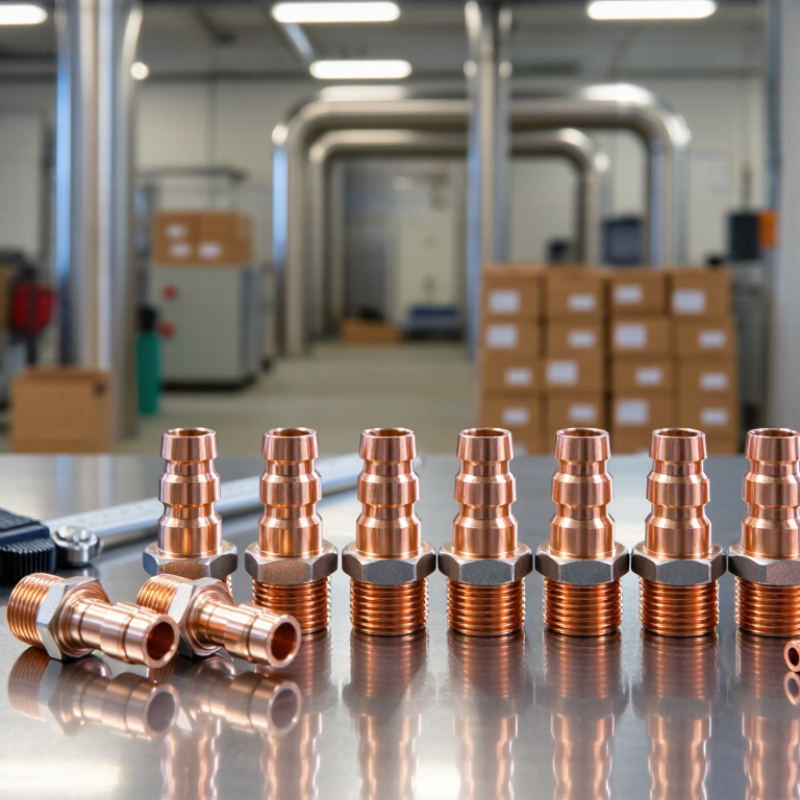
China copper tee fittings are pipe connectors with one inlet and two outlets. Their three-way design divides or combines fluid flow within a piping system. Most are made from copper or copper alloys selected for strength, conductivity, and corrosion resistance.
These fittings commonly serve drinking-water lines, heating systems, air-conditioning circuits, and refrigeration equipment. A tee can create a branch without complicated pipe routing. In a workshop, its smooth internal surface helps reduce turbulence and pressure loss. Copper also tolerates temperature changes well. However, the fitting must match the pipe size, wall thickness, joining method, and working pressure.
Key features include accurate dimensions, clean internal passages, and reliable connections. Common joining options include soldering, brazing, compression, and pressing. Manufacturing quality matters greatly. A dependable China supplier should provide material certificates, dimensional inspection records, and pressure-test information. Factory experience also shows in consistent socket depth and even wall thickness. These details affect installation speed and leak prevention.
Do not trust photographs alone. Even experienced buyers can overlook small dimensional differences. Ask for samples before approving larger orders. Check surface scratches, oval openings, burrs, and visible contamination. Supplier reliability also depends on traceability, packaging, production capacity, and responsive technical support. A lower price may hide weaker inspection practices, although price alone cannot prove quality. Clear drawings and written specifications reduce misunderstandings between the buyer and manufacturer.
A reliable supplier should prove quality beyond a polished website. Request samples and check the tee’s wall thickness, branch alignment, surface finish, and internal cleanliness. A fitting that looks smooth outside may still have a thin section near the joint.
Confirm the copper grade and applicable standards before comparing prices. Ask for material certificates, dimensional inspection records, pressure-test results, and production batch numbers. Standards such as ASTM B75 or EN 1254 may apply, but suitability depends on your market and system design. Traceability matters. Each carton should connect to a specific production record.
Visit the factory, if possible, or arrange a live video audit. Observe tube cutting, forming, brazing preparation, inspection, and packing. Ask how workers control springback and prevent scratches during handling. Also review minimum order quantities, tooling charges, lead times, packaging strength, and replacement procedures. Cheap quotes often exclude testing or reinforced cartons.
Communication reveals technical maturity. Send a clear drawing with tolerances, connection type, pressure requirements, and intended application. Compare the supplier’s questions, not only the final quotation. A strong supplier will identify unclear details. A weak one may simply agree to everything.
Do not treat one successful sample as permanent proof. Production consistency can change after an order grows. I would repeat inspections, especially for the first three batches. Even experienced buyers can miss a small dimensional drift. That is an uncomfortable lesson, but it protects installation reliability.
What Are the Top China Copper Tee Fitting Suppliers?
China’s copper tee fitting market is best understood by supplier category, not by a simple ranking. Large integrated manufacturers usually offer drawn copper tube, forged tees, brazed joints, and pressure-tested assemblies. Their advantage is process control. They can match wall thickness across large orders and provide mill certificates. The International Copper Study Group reported global refined copper usage of about 26.2 million tonnes in 2024. That demand supports strong production capacity, but capacity alone does not prove fitting quality.
Specialized OEM factories form the second major category. They focus on HVAC, refrigeration, plumbing, or fire-protection fittings. Many can produce equal tees, reducing tees, and custom dimensions from customer drawings. Look for ISO 9001 systems, EN or ASTM testing, dimensional inspection records, and batch traceability. The U.S. Geological Survey continues to identify China as one of the world’s leading copper-consuming and refining countries. Still, a factory’s copper access does not guarantee stable alloy chemistry.
Regional wholesalers and export-oriented stockists serve smaller buyers. They often hold common sizes, such as 15 mm, 22 mm, and 28 mm tees, for faster dispatch. Their weakness is less visible: mixed production batches may complicate traceability. Custom engineering suppliers are useful for unusual branches or low-volume prototypes. A perfect supplier category does not exist. Buyers should compare leak-test pressure, copper grade, packaging protection, and corrective-action records before judging price. Fancy catalogs are not evidence.
The chart compares supplier categories by the number of common application groups they typically serve. The values are category-coverage indicators, not company rankings, market shares, or brand data.
When evaluating China copper tee fitting suppliers, quality standards should come before price. In practical sourcing, I check whether fittings follow ASME B16.22, EN 1254, or another specified standard. The correct requirement depends on the project and connection method. Suppliers should provide material grades, dimensional tolerances, and pressure ratings. Copper content matters. So does wall thickness.
Reliable manufacturers normally operate under ISO 9001 quality systems. Some also hold ISO 14001 or relevant pressure-equipment certifications. A certificate alone proves little. Buyers should verify its issuing body, validity period, and covered product range. Request mill test certificates and heat-number traceability. These details connect each batch to its raw copper source.
Manufacturing capability separates established suppliers from simple trading companies. Look for controlled extrusion, forming, machining, annealing, and surface cleaning processes. Automated gauges can check branch diameter and center alignment. Pressure testing should simulate the intended service conditions. Samples should show clean ends, even walls, and no visible cracks. Ask for inspection records, not only photographs. Factory audits can reveal storage problems, mixed materials, or weak packaging. Small details matter.
I would still inspect the first production batch. Even capable factories can miss a tolerance after tooling changes. Clear corrective-action records show professional control. A dependable supplier communicates limitations instead of promising everything. That honesty is valuable.
What Are the Top China Copper Tee Fitting Suppliers?
Global buyers should evaluate China copper tee fitting suppliers beyond catalog photos and attractive quotations. Ask for dimensional drawings, copper grade, wall thickness, connection type, and pressure requirements. A reliable supplier should explain production controls clearly, including tube forming, brazing, cleaning, and final inspection. Request recent test reports and sample pieces before placing a large order. Small differences in branch diameter can cause installation problems.
Pricing usually depends on copper market movement, fitting size, wall thickness, order volume, tooling, and packaging. Compare quotations using the same specifications and trade terms. A cheaper offer may exclude export packaging, inspection, or inland transport. It can mislead. Confirm the minimum order quantity, sample charges, payment schedule, and quotation validity period in writing. Leave room for copper price changes.
Export planning needs equal attention. Confirm the supplier’s experience with commercial invoices, packing lists, certificates of origin, and required product documents. Clarify whether the quoted price covers shipment to the port or the final destination. Use moisture-resistant cartons and separators to reduce scratches during ocean transport. Check lead time carefully, especially before construction seasons. A pre-shipment inspection can verify quantity, markings, dimensions, and carton condition. Still, inspection is not a substitute for clear specifications. Buyers should also review communication quality. Slow replies, vague answers, or changing documents often create larger costs later.
The comparison below summarizes common China-based supplier profiles for copper tee fittings. Figures are indicative market ranges for standard products and should be confirmed through a current quotation, technical drawing, sample approval, and shipping calculation.
| Supplier Profile | Typical Product Range | Common Copper Materials | Applicable Standards | Typical Size Range | Indicative Export Price* | Typical MOQ | Production Lead Time | Common Export Documents | Best Fit for Global Buyers |
|---|---|---|---|---|---|---|---|---|---|
| Large HVAC & Refrigeration Fitting Manufacturer | Equal tees, reducing tees, long-radius fittings, capillary fittings, and refrigeration-grade fittings | C12200 TP2 Phosphorus-deoxidized copper | ASTM B75, ASTM B88, EN 1254-1, ASME B16.22; project-specific requirements may apply | 6 mm–108 mm outside diameter | US$0.80–US$18.00 per piece | 500–2,000 pieces per size | 20–35 days after order confirmation | Commercial invoice, packing list, bill of lading, certificate of origin, material certificate, inspection report | OEM programs, HVAC distributors, and repeat container-volume buyers |
| Plumbing and Press-Fitting Specialist | Solder-joint tees, press-system tees, compression-compatible fittings, and potable-water fittings | C12200 CW024A Low-phosphorus copper alloys suitable for tube joining | EN 1254-1, EN 1254-7, ASTM B88 compatibility, WRAS or other local approvals where available | 12 mm–54 mm outside diameter | US$0.90–US$12.00 per piece | 300–1,000 pieces per size | 25–40 days after approved samples | Invoice, packing list, origin certificate, dimensional inspection report, test records, compliance declaration | Building-services distributors and potable-water installation markets |
| High-Volume Stamping and Forming Factory | Standard equal tees, reducing tees, thin-wall formed fittings, and high-volume private-label components | C11000 C12200 Electrolytic tough-pitch or phosphorus-deoxidized copper | ASTM B75, ASTM B88, EN 1254 dimensional requirements, and buyer drawings | 6 mm–76 mm outside diameter | US$0.45–US$8.50 per piece | 1,000–5,000 pieces per size | 18–30 days for standard tooling; longer for new tooling | Invoice, packing list, bill of lading, certificate of origin, packing declaration, inspection records | Cost-sensitive buyers with stable demand and standardized specifications |
| Precision CNC and Custom-Fabrication Supplier | Custom tees, thick-wall fittings, machined transitions, non-standard branches, and small production runs | C11000 C12200 Other copper alloys subject to drawing and application requirements | Customer drawings, ASTM material specifications, ISO 9001 quality procedures, and agreed inspection plans | 10 mm–150 mm outside diameter; custom sizes available | US$8.00–US$80.00 per piece | 50–300 pieces per drawing | 30–55 days, including process approval where required | Invoice, packing list, material certificate, dimensional report, certificate of origin, photos, and inspection dossier | Industrial equipment, repair projects, prototypes, and engineered applications |
| Stock-Based Export Trading and Consolidation Supplier | Mixed-size standard tees sourced from qualified factories; private labeling and consolidated shipments may be available | Usually C12200 or TP2; exact grade must be stated on the quotation and certificate | ASTM, EN, or JIS requirements depending on the selected factory and destination market | 6 mm–108 mm outside diameter | US$1.00–US$22.00 per piece | 100–500 pieces per size | 7–20 days for stock; 25–45 days for replenishment | Invoice, packing list, bill of lading, certificate of origin, factory test certificate when requested | Small importers, mixed-container orders, and buyers requiring product consolidation |
| Project-Approved Industrial Supplier | Heavy-duty tees, grooved or brazed fittings, engineered assemblies, and project-specific configurations | C12200 C11000 Material grade selected according to pressure, temperature, and joining method | ASTM B75, ASTM B88, ASME B16.22, EN 1254, ISO 9001 procedures, and project specifications | 15 mm–219 mm outside diameter | US$12.00–US$150.00 per piece | 100–500 pieces per size or project batch | 35–70 days after drawing and quality-plan approval | Full commercial set, material traceability, inspection and test plan, mill certificates, dimensional report, origin certificate | Power, industrial piping, shipbuilding, and EPC procurement projects |
It is a three-way pipe connector. One inlet divides into two outlets, or two flows combine into one.
They serve drinking-water, heating, air-conditioning, and refrigeration systems. A tee creates a branch without complicated pipe routing.
Most use copper or copper alloys. These materials offer strength, conductivity, and corrosion resistance.
Match pipe size, wall thickness, joining method, and working pressure. Small differences can cause leaks or installation delays.
Common options include soldering, brazing, compression, and pressing. The fitting must suit the selected method.
Check accurate dimensions, clean passages, even walls, and consistent socket depth. Look for scratches, burrs, oval openings, and contamination.
Request material certificates, dimensional inspection records, and pressure-test results. Heat-number traceability connects each batch with its copper source.
No. Photographs may hide small dimensional problems. Ask for samples and inspect the first production batch.
Not necessarily. A low price may reflect weaker inspections or packaging. Price alone cannot prove quality.
Look for controlled forming, machining, annealing, cleaning, and pressure testing. Responsive technical support also matters. Promises are not enough.
China’s Copper Tee Fitting industry offers a wide range of products for plumbing, HVAC, refrigeration, fire protection, and industrial piping systems. These fittings are designed to connect three copper pipes, allowing fluid or gas to branch into different directions. When evaluating suppliers, buyers should consider material purity, dimensional accuracy, pressure resistance, production experience, quality control procedures, customization capabilities, and communication efficiency. Supplier categories may include large-scale manufacturers, specialized fitting producers, and export-oriented factories, each serving different purchasing needs.
Reliable suppliers should demonstrate compliance with relevant quality standards, maintain consistent manufacturing capabilities, and provide clear inspection records and product documentation. Global buyers should also assess minimum order quantities, pricing structure, tooling costs, packaging, lead times, payment terms, and export experience. Comparing quotations alone is not enough; product quality, testing support, delivery reliability, and after-sales communication are equally important. A careful evaluation process can help buyers select a suitable China-based supplier and establish a stable, cost-effective supply relationship.

Nuoheng