China’s fire protection industry has become a major sourcing destination for global buyers. Its manufacturers now supply valves, hydrants, couplings, sprinkler accessories, hose fittings, and related Fire Fittings for commercial and industrial projects.
However, a polished catalog does not prove dependable performance. Buyers should examine factory experience, material traceability, pressure testing, production capacity, quality control, and export service. A brass coupling may look excellent, yet poor threads or inconsistent sealing can create serious installation problems. Small details matter.
Fire protection engineer Robert Solomon has emphasized, “Fire safety depends on the performance of the complete system, not one isolated component.” This principle deserves attention when comparing Chinese manufacturers. A fitting must match the pipe system, pressure rating, installation method, and applicable project requirements.
This guide reviews ten China-based Fire Fittings manufacturers for international buyers. It considers product range, manufacturing capability, certifications, customization, delivery support, and market reputation. The ranking is not absolute. Supplier strength can change with management, testing resources, and production focus.
Some manufacturers may offer attractive prices but limited technical support. Others may provide stronger documentation at a higher cost. That trade-off requires honest evaluation. Buyers should request current certificates, test reports, samples, and references before placing large orders.
No shortlist removes every risk. Still, careful comparison can reduce avoidable failures. The right supplier should provide more than fittings; it should provide evidence, consistency, and practical cooperation throughout the project.
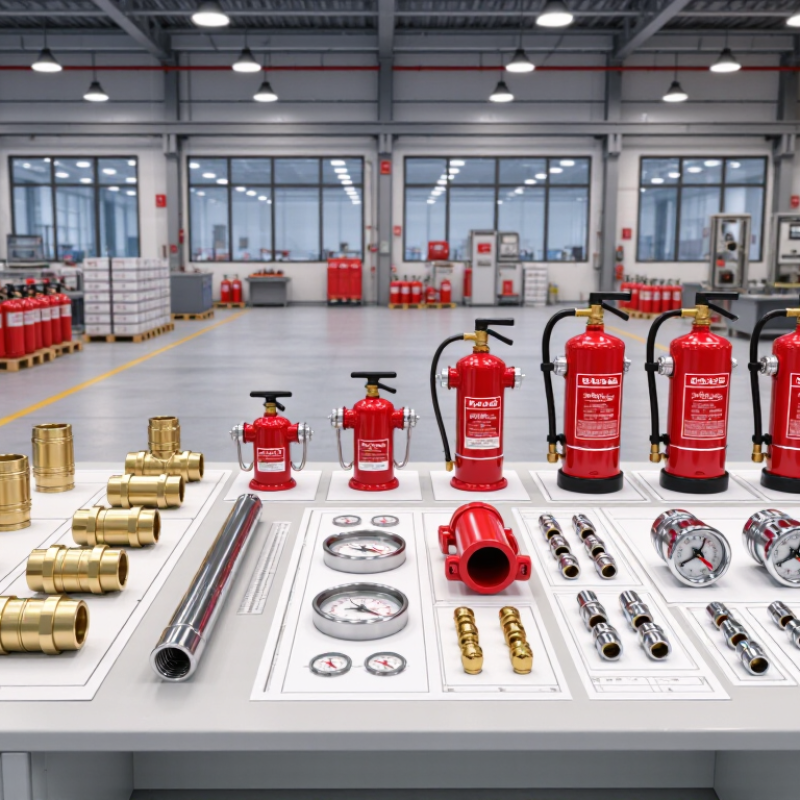
China’s fire-fittings industry serves warehouses, high-rise buildings, factories, tunnels, and municipal networks. Many manufacturers supply valves, grooved couplings, flanges, hydrant accessories, and sprinkler connections. For global buyers, pressure class is not a decorative specification. It affects safety, compatibility, testing, and lifecycle cost. PN16 fittings are common in moderate-pressure fire-water systems. PN25 and PN40 options suit higher static pressure, pump discharge zones, and demanding industrial layouts.
Selection should begin with the complete hydraulic design, not a catalogue headline. Engineers should verify working pressure, test pressure, temperature, medium, pipe diameter, and connection standard. A PN40 fitting may be unnecessary in a low-rise warehouse, while PN16 can be unsuitable near a high-pressure pump. That mistake can hide behind a neat installation. Request material certificates, dimensional drawings, coating details, pressure-test records, and traceable batch information. Independent inspection can also confirm wall thickness and sealing performance before shipment.
Applications often determine the fitting design. Grooved products help accelerate installation in commercial buildings and distribution centres. Flanged assemblies support heavier pipelines, pump rooms, and industrial fire networks. Threaded fittings remain practical for smaller branch lines, but thread quality needs careful inspection. Corrosion protection matters in coastal storage areas and humid plant rooms. In practice, supplier rankings should reflect repeatable quality, documented testing, production capacity, and technical communication. Yet no checklist replaces site-specific engineering. Reconsider assumptions when local codes, water quality, or seismic movement change the design.
Selecting China’s top ten fire fittings manufacturers should begin with evidence, not catalogue claims. NFPA’s 2024 U.S. Fire Loss report recorded 1,504,500 fires in 2022 and about $18.1 billion in property damage. Those figures make traceable performance essential. For global buyers, UL listing and FM approval should match the exact fitting, material, pressure class, and size. A factory certificate alone is insufficient. Ask for current certificates, scope pages, model numbers, and surveillance records. Verify each certificate through the relevant certification database. Small detail, major risk.
CCC compliance matters when products enter the applicable Chinese market, while ISO 9001 indicates a controlled quality system. It does not guarantee perfect castings or reliable threads. The ISO Survey reports more than one million ISO 9001 certificates worldwide, so the logo alone is weak evidence. Request incoming-material records, heat numbers, hydrostatic test results, coating thickness readings, and batch-level inspection reports. Compare these records with samples from three production lots.
Then audit corrective-action data, calibration status, and complaint response times. I would also inspect packing: capped threads, dry cartons, and visible labels prevent damage after testing. This step is often overlooked. A mistake remains possible. Factory audits can miss night-shift behavior or rushed subcontracting. Rank candidates by verified scope, repeatability, independent test evidence, and transparent traceability, not price or polished English.
China Top 10 Fire Fittings Manufacturers for Global Buyers
A useful manufacturer profile should show more than production capacity. It should explain how ductile-iron fire fittings are cast, machined, coated, and pressure-tested. Look for heat numbers, inspection records, and clear material data. Small details matter. A rough flange face can cause installation trouble. Inconsistent wall thickness can create serious quality concerns.
Grooved fire fittings deserve practical attention. Profiles should mention groove dimensions, coupling compatibility, gasket materials, and sealing tests. Threaded fittings require accurate thread gauges and clean machining. Ask whether workers inspect every batch or only sample a few pieces. Flanged fittings should include drilling patterns, face finishes, bolt-hole accuracy, and pressure ratings. These details help engineers compare suppliers fairly.
Reliable Chinese manufacturers usually provide drawings, samples, test reports, and traceable packing labels. Experienced buyers may also review foundry controls, coating thickness, and warehouse protection against rust. A factory can appear efficient while missing basic documentation. That weakness should not be ignored. The strongest profiles also describe export experience, inspection procedures, and responses to nonconforming parts. Buyers should request independent verification when project risk is high. No profile is perfect. Some suppliers communicate well but offer limited customization. Others have strong machining equipment yet weak after-sales support. Careful comparison remains essential.
| Rank | Anonymous Manufacturer Profile | Primary Manufacturing Region in China | Core Fitting Families | Typical Materials | Connection Types | Common Size Range | Typical Pressure Class | Relevant Standards | Quality-Control Features | Typical Export Applications |
|---|---|---|---|---|---|---|---|---|---|---|
| 1 | Profile CN-F01 Large-scale ductile-iron specialist |
Hebei / North China | Grooved couplings Elbows Tees Reducers | Ductile iron, commonly ASTM A536 grades 65-45-12 or equivalent | Grooved, threaded, flanged | DN25-DN300 1 in-12 in |
Up to 300 psi | ASTM A536; AWWA C606; UL 213 or FM approval where applicable | Dimensional inspection, coating-thickness checks, hydrostatic testing, batch traceability | Commercial buildings, warehouses, sprinkler risers, water-based fire systems |
| 2 | Profile CN-F02 Grooved-system production profile |
Shandong / East China | Rigid couplings Flexible couplings Mechanical tees Caps | Ductile iron housing with EPDM gasket options for water service | Grooved and roll-grooved pipe connections | DN25-DN600 1 in-24 in |
Typically 175-300 psi | AWWA C606; ASTM A536; NFPA 13 installation compatibility | Groove-diameter measurement, gasket inspection, pressure testing, coating adhesion checks | Fire sprinkler networks, hydrant systems, industrial utility piping |
| 3 | Profile CN-F03 Threaded malleable-iron profile |
Hebei / Tianjin Area | Threaded elbows Tees Bushings Unions | Black or hot-dip-galvanized malleable iron | Female and male threaded connections | DN8-DN100 1/4 in-4 in |
Commonly 150-300 psi | ASTM A197; ASME B1.20.1; EN 10242 | Thread-gauge inspection, wall-thickness checks, tensile testing, zinc-coating inspection | Sprinkler branch lines, fire hose cabinets, low- and medium-diameter pipework |
| 4 | Profile CN-F04 Flanged ductile-iron profile |
Jiangsu / Yangtze River Delta | Flanged elbows Flanged tees Reducers Crosses | Ductile iron with fusion-bonded epoxy or liquid epoxy coating | Flanged, grooved, flanged-to-grooved adaptors | DN50-DN600 2 in-24 in |
PN10-PN16; commonly 150-250 psi | EN 545; EN 1092-2; ISO 2531; ASTM A536 | Flange-face inspection, pressure testing, coating holiday testing, chemical composition verification | Pump rooms, fire-water mains, underground and above-ground fire networks |
| 5 | Profile CN-F05 UL/FM-oriented fire-fitting profile |
Fujian / Southeast China | Grooved fittings Flange adaptors Reducers End caps | Ductile iron; EPDM and nitrile gasket configurations depending on service | Grooved and flanged | DN25-DN300 1 in-12 in |
Up to 300 psi where approved | UL 213 and FM 1920 for applicable listed products; ASTM A536 | Third-party witnessing, batch marking, hydrostatic tests, material certificates, production audits | International sprinkler projects requiring third-party listed components |
| 6 | Profile CN-F06 High-volume casting profile |
Shanxi / North-Central China | Elbows Tees Crosses Plugs | Malleable iron and ductile iron; galvanized or black finish | Threaded and grooved | DN15-DN150 1/2 in-6 in |
Typically 150-300 psi | ASTM A197; ASTM A536; ASME B1.20.1; EN 10242 | Spectrometer analysis, casting-defect inspection, thread inspection, pressure testing | Residential, commercial, agricultural, and light-industrial fire systems |
| 7 | Profile CN-F07 Large-diameter pipeline profile |
Shandong / Bohai Economic Rim | Flanged fittings Grooved reducers Dismantling joints Adaptors | Ductile iron with epoxy, zinc-rich, or cement-mortar-compatible coating systems | Flanged, grooved, restrained connections | DN80-DN1000 3 in-40 in |
PN10-PN25 depending on design | ISO 2531; EN 545; EN 1092-2; AWWA C110/C153 where specified | Radiographic or ultrasonic checks where required, hydrostatic testing, dimensional and coating reports | Fire-water ring mains, municipal hydrant networks, industrial fire-water plants |
| 8 | Profile CN-F08 Corrosion-protection focused profile |
Zhejiang / East China | Galvanized threaded fittings Grooved fittings Drain fittings Test assemblies | Malleable iron, ductile iron, galvanized steel accessories | Threaded, grooved, flanged | DN15-DN200 1/2 in-8 in |
Typically 150-300 psi | ASTM A197; ASTM A153/A123 for applicable zinc coatings; ASME B1.20.1 | Zinc-coating measurement, salt-spray testing where specified, thread inspection, leak testing | Humid climates, coastal facilities, warehouses, and packaged fire-protection systems |
| 9 | Profile CN-F09 Custom-engineered fitting profile |
Guangdong / South China | Non-standard elbows Fabricated spools Flanged branches Special reducers | Ductile iron, carbon steel, stainless steel, and coated steel according to project specification | Flanged, grooved, welded, threaded | DN25-DN800 1 in-32 in |
Project-specific; commonly PN10-PN25 | ASME B16.5; ASME B16.9; EN 1092-1/2; ASTM material specifications | Engineering drawings, welding procedure controls, NDT where required, dimensional reports, pressure testing | Data centers, petrochemical sites, airports, power plants, and EPC projects |
| 10 | Profile CN-F10 OEM and private-label export profile |
Hubei / Central China | Grooved couplings Threaded fittings Flanged fittings Accessories | Ductile iron and malleable iron with black, galvanized, or epoxy finishes | Grooved, threaded, flanged | DN15-DN400 1/2 in-16 in |
Typically 150-300 psi | ASTM A197; ASTM A536; EN 10242; AWWA C606 where applicable | Incoming-material inspection, first-article approval, sampling plans, marking control, final visual inspection | Distributor programs, OEM supply, replacement markets, and standardized fire-fitting packages |
Global buyers should compare standards before comparing factory prices. ASTM A536 covers ductile iron castings, not complete fire-fitting performance. Common grades, such as 65-45-12, specify minimum tensile strength, yield strength, and elongation. A valid inspection file should include heat numbers, chemical results, dimensional checks, and pressure-test records.
ASME B16.9 controls dimensions, tolerances, and ratings for factory-made wrought butt-welding fittings. It does not replace material certification or fire-system approval. EN-based projects may reference EN 10242 for threaded malleable fittings and EN 1092 for flanges. Chinese projects often use GB/T 3287 for malleable iron fittings and GB/T 5135.11 for grooved fittings. These standards are not interchangeable. Wall thickness, thread form, groove geometry, and coating requirements can differ.
NFPA’s Fire Loss in the United States During 2023 estimated about 1.39 million fires and 22.4 billion dollars in property damage. That figure reinforces the need for traceable components, not only attractive catalogs. FM Global’s property-loss guidance also stresses approved materials, controlled installation, and inspection access. A practical review should check groove measurements with a calibrated gauge. It should also verify rubber compound, bolt grade, coating thickness, and batch traceability. The weak point is often the missing test record. A catalog comparison can still mislead. Suppliers should explain deviations clearly, because “EN compliant” or “ASTM material” alone may be incomplete evidence.
Global buyers should assess fire fittings manufacturers beyond catalog photos and low quotations. Ask for pressure-test reports, material certificates, and traceable batch records. Test samples under realistic pressure, temperature, and connection conditions. A fitting may pass a basic test but fail after repeated installation. Independent laboratory verification adds confidence. Factory audits also reveal storage quality, calibration practices, and production discipline.
Lead time must include production, inspection, packing, and port handling. Request a written schedule with milestones, not one estimated delivery date. Confirm MOQ by item, size, material, and finish. Small trial orders may carry higher unit costs. Export capacity matters when projects require several container loads. Check previous shipment records, packaging photos, and customs documentation. After-sales support should cover installation questions, replacement procedures, and response times. I have found that vague support promises create delays after delivery. That weakness deserves attention.
Tips: Request three recent test reports. Compare report dates and product codes. Ask for spare sealing parts. Keep one approved sample on file. Do not trust certificates alone. A checklist can still miss communication problems, especially across time zones. Use a shared inspection form, and record every change before mass production.
They indicate pressure classes for fire-water fittings. PN16 suits moderate pressure. PN25 and PN40 support higher system pressures.
Start with the hydraulic design. Check working pressure, test pressure, temperature, medium, diameter, and connection standard. A higher rating is not always better.
PN16 fittings often serve moderate-pressure systems. They may suit low-rise warehouses and standard commercial buildings. Site conditions still require verification.
PN40 fittings may suit pump discharge zones and demanding industrial networks. High static pressure can justify their use. Confirm the actual design pressure first.
Request material certificates, drawings, coating details, pressure-test records, and batch traceability. Independent inspection can verify wall thickness and sealing performance.
Check groove dimensions, coupling compatibility, gasket materials, and sealing-test results. Incorrect dimensions can delay installation. The gasket detail is easy to overlook.
Threaded fittings suit smaller branch lines. Inspect thread quality and machining carefully. Flanged assemblies support heavier pipelines, pump rooms, and industrial networks.
Review casting, machining, coating, testing, capacity, and technical communication. Ask about inspection frequency and nonconforming parts. Good communication alone is not enough.
Coastal storage areas and humid plant rooms can accelerate corrosion. Check coating thickness and warehouse protection. Rust may begin before installation.
No. Site-specific engineering remains essential. Local codes, water quality, and seismic movement may change the design. Some assumptions deserve another look.
This guide introduces China’s Fire Fittings industry, focusing on pressure classes from PN16 to PN40 and their applications in fire-protection, industrial, commercial, and infrastructure projects. It explains how global buyers can evaluate leading manufacturers through quality systems and certifications such as UL, FM, CCC, and ISO 9001, while also considering production capabilities for ductile-iron, grooved, threaded, and flanged fittings.
The article compares technical requirements related to ASTM A536, ASME B16.9, EN, and GB/T standards, helping buyers assess material performance, dimensions, pressure resistance, coating quality, and compatibility. It also provides a practical purchasing checklist covering inspection and testing procedures, production lead times, minimum order quantities, export experience, documentation, packaging, and after-sales support. Together, these criteria help international purchasers select reliable suppliers and build a secure, compliant, and cost-effective sourcing strategy.

Nuoheng