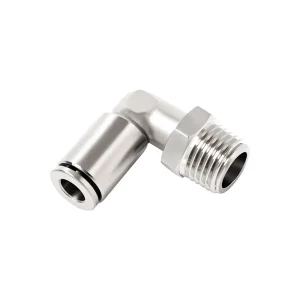
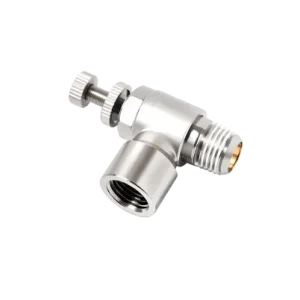
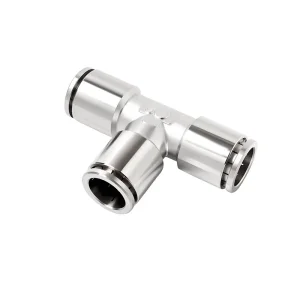
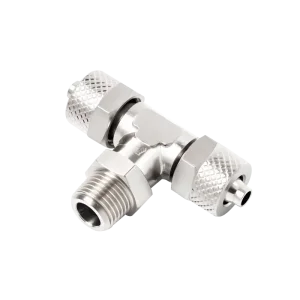
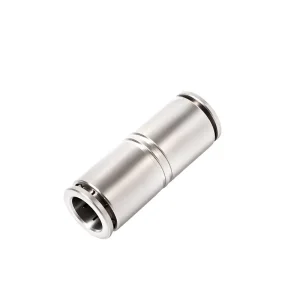
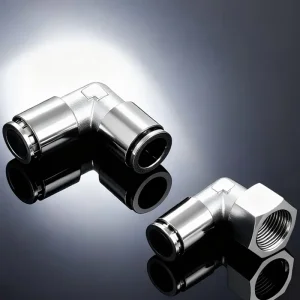
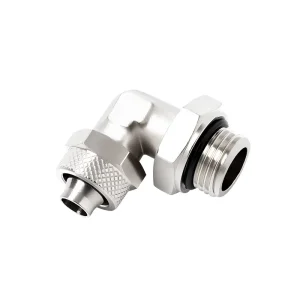
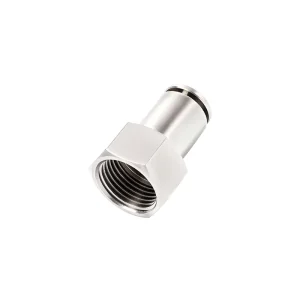
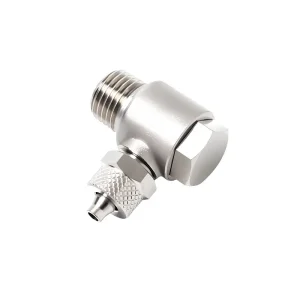
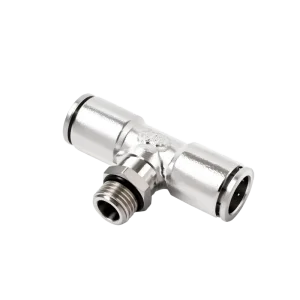
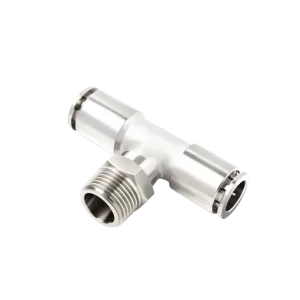
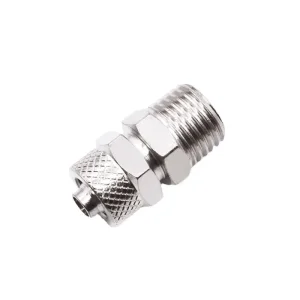
Explore our elite collection of OEM/ODM push-in and push-on components engineered for zero-leak performance and extreme pressure handling.
Over 15 Years of Unrivaled Expertise in Precision Pneumatic Manufacturing and Custom OEM/ODM Engineering.
Welcome to NHPC, a premier global designer, developer, and manufacturer of top-tier pneumatic systems and thread components. With a rich history spanning more than 15 years, our journey began with a definitive, powerful vision: to revolutionize the pneumatic industry by delivering high-quality, innovative, and exceptionally reliable components that accommodate the evolving requirements of automated systems. Today, we are proud to stand as a trusted name globally, serving a diverse spectrum of customers across key industrial regions including Europe, North America, Southeast Asia, and South America.
Our comprehensive production facility specializes in the micro-precision manufacturing of push-in fittings, push-on G-thread components, flow regulators, quick-coupling valves, PU/PE pipes, and highly specialized systems such as fire-retardant connectors for battery storage applications. Every component undergoes rigorous design iterations and precision lathe execution to ensure maximum system reliability, low pressure drop, and seamless operational lifecycles.
Leveraging extensive experience, we provide optimized cost structures and reliable system recommendations to support complex custom layouts.
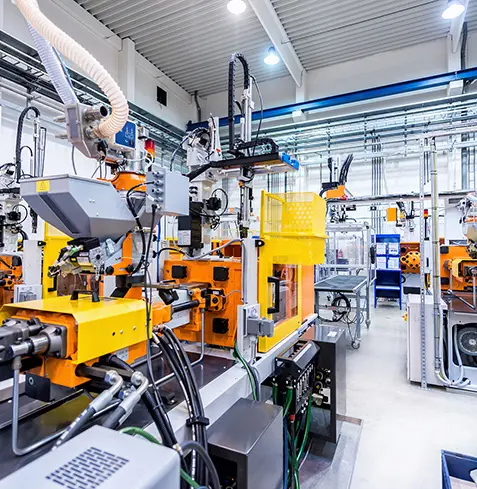
Equipped with ultra-high precision surface treatment machines, automatic CNC lathes, and plastic injection molds for zero-tolerance control.
Our engineering team answers technical queries immediately, delivering rapid custom prototyping and streamlined OEM production cycles.
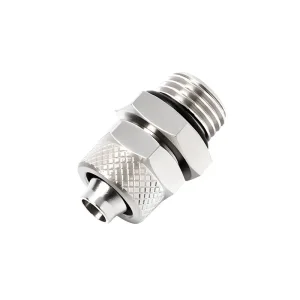
In modern industrial fluid networks and pneumatic automation systems, thread interfaces are crucial components that dictate the safety, efficiency, and reliability of the overall pipeline. The G Thread (also known as British Standard Pipe Parallel or BSPP, conforming to ISO 228-1 standards) has consolidated its place as the premier interface type across high-pressure environments. Unlike tapered threads (NPT or PT/BSPT) which rely on deformation between threads to create a metal-to-metal block, G threads feature a straight, parallel design. This structural variance necessitates an external sealing mechanism—most commonly an O-ring or an elastomer washer at the base of the thread—to provide an airtight fit under severe vibration and dynamic pressure fluctuations.
1. Reusable Integrity: Tapered threads wear out over repeated disassembly due to physical thread distortion. In contrast, parallel G threads maintain structural dimensions indefinitely, allowing simple O-ring replacements during routine maintenance.
2. Predictable Depth: G-thread fittings seat against a pre-machined spot face. The alignment direction of elbow or tee fittings can be precisely predetermined—crucial for tight spacing and robotic routing.
3. Vibration Resistance: O-ring-backed parallel connections absorb minor axial and radial forces, keeping joints leak-free under persistent industrial vibration.
The global demand for high-end G thread push-in fittings and modular connectors has grown exponentially over the past five years. Geographically, Europe remains the largest consumer, driven by standard conformity requirements in mechanical engineering and plant construction. However, the Asia-Pacific region is experiencing the fastest rate of growth, supported by large-scale factory automation programs in China, Japan, and Vietnam, along with the booming Electric Vehicle (EV) battery and Energy Storage System (ESS) manufacturing hubs.
A significant driver in the market is the shift toward "smart manufacturing" where pneumatic systems must operate at higher efficiencies with minimal down-time. Leaking fittings are a primary source of industrial energy waste, accounting for up to 20-30% of total compressed air energy loss in typical assembly lines. Premium manufacturers like NHPC address this issue by engineering precision-toleranced parallel threads with high-density Viton or NBR gaskets, which drop leak incidence rates to virtually zero.
For procurement managers and system designers, selecting the proper thread type is essential to avoid installation errors and mechanical failures. The following comparative data visualization provides a clear overview of the performance criteria of G threads relative to alternative standard types:
| Characteristic | G Thread (BSPP / ISO 228) | NPT (ANSI/ASME B1.20.1) | R / PT Thread (BSPT / ISO 7-1) |
|---|---|---|---|
| Thread Type | Parallel (Straight) | Tapered (1:16 slope) | Tapered (1:16 slope) |
| Sealing Method | O-Ring, Washer or Gasket | Thread Sealant Tape / Paste | Mating Thread Deformation |
| Standard Pressure Range | Up to 25 Bar (Air) / 150 Bar (Fluid) | Up to 20 Bar (Typical applications) | Up to 20 Bar |
| Reusability | Excellent (Replace gasket only) | Poor (Degrades thread profile) | Moderate |
| Assembly Precision | High (Consistent seating depth) | Variable (Depends on torque) | Variable (Depends on torque) |
The applications for modern push-in and thread connections span multiple critical industries, each requiring specific material characteristics and design formats:
Modern battery cabinets and ESS units require highly reliable coolant lines. The NHPC Flame-Resistant PLF, PE, and PC series are constructed using flame-retardant polymers that satisfy UL94-V0 compliance standards. These connectors maintain absolute integrity even when exposed to high temperature spikes, preventing coolant leakage into active cell modules and eliminating thermal runaway hazards.
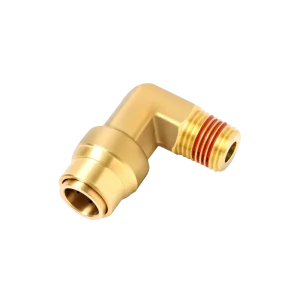
Automotive air-brake circuits operate under continuous dynamic stress. Our DOT 90° Male Non-Swivel Elbow and Brass DOT Air Brake Line Fittings are engineered to comply with strict transportation safety codes. Using robust, high-grade brass configurations, these components withstand road debris impact, salt mist exposure, and thermal shock, ensuring that safety-critical air lines remain pressurized at all times.
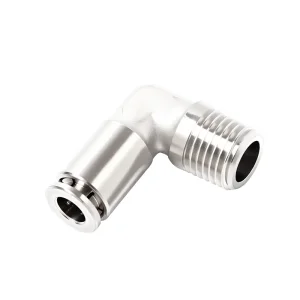
In high-speed robotic pick-and-place automation, the weight and orientation of fittings are critical. Standard push-on elbow fittings with 360-degree rotation capabilities allow pneumatics lines to move freely without putting torsional stress on the tubing, extending tube longevity and preventing unwanted kinks.
As industry regulations push toward decarbonization and reduced carbon footprints, the manufacturing of pneumatic fittings is shifting toward eco-friendly initiatives. The upcoming generation of G thread connectors centers on two primary goals:
Authored by: NHPC Technical Committee & Quality Engineering Division
Target Standards: ISO 228-1 (BSPP G Thread), ISO 7-1 (BSPT R Thread), ASME B1.20.1 (NPT), DOT FMVSS 106, UL 94 V-0 (Flame Retardancy).
NHPC operates a certified CNC production floor utilizing automated testing matrices to evaluate thread conformity, shear resistance, and burst pressures.
NHPC products are developed specifically to handle heavy duty configurations across global high-technology sectors.

Critical engineering and application answers straight from NHPC's technical R&D department.
A: No. G-threads (BSPP) have a 55-degree thread angle and parallel pitch, while NPT threads have a 60-degree angle and tapered profile. Intermating them directly will cross-thread the connection and cause fluid bypass. Always use a conversion adapter (e.g., G-thread male to NPT female) to bridge different connection standards.
A: The rotatable design allows the elbow body to swivel independently from the threaded G-base. During assembly, the operator secures the G-thread core tightly into the manifold, then rotates the elbow body to align with incoming tubing, avoiding structural bending and kink stresses on pneumatic hoses.
A: UL94-V0 compliance indicates that the polymer sleeve stops burning within 10 seconds of contact with an active flame. In battery thermal management enclosures, this prevents external fire spread via the coolant distribution pipes and guarantees structural line support under extreme heat loads.
A: Standard brass fittings are designed for compressed air, inert gases, and industrial hydraulic media. For drinking water systems, please consult our sales division to specify lead-free copper alloy grades or FDA-compliant stainless steel push-in variations.
A: For pneumatic applications, our fittings operate comfortably between -0.99 Bar (-29.5 inHg) vacuum and 15 Bar (220 PSI) working pressure, with extreme-limit burst tests passing 25 Bar. Operating temperatures span from -20°C to 80°C with standard NBR/Polyurethane profiles, extendable up to 120°C when ordered with custom Viton (FKM) O-ring inserts.
Select from our extensive product range for custom pipeline systems, storage setups, and heavy brake systems.
Looking for detailed drawings, specific flow rates, or dynamic CAD models of our fitting lines?
Request Technical Catalogue & Dynamic CAD Models Nuoheng